Sampelong in the Perspective of Organology
DOI:
https://doi.org/10.24036/jsu.v15i2.70Keywords:
alat musik tiup, sampelong, organologi, jalua bukikAbstract
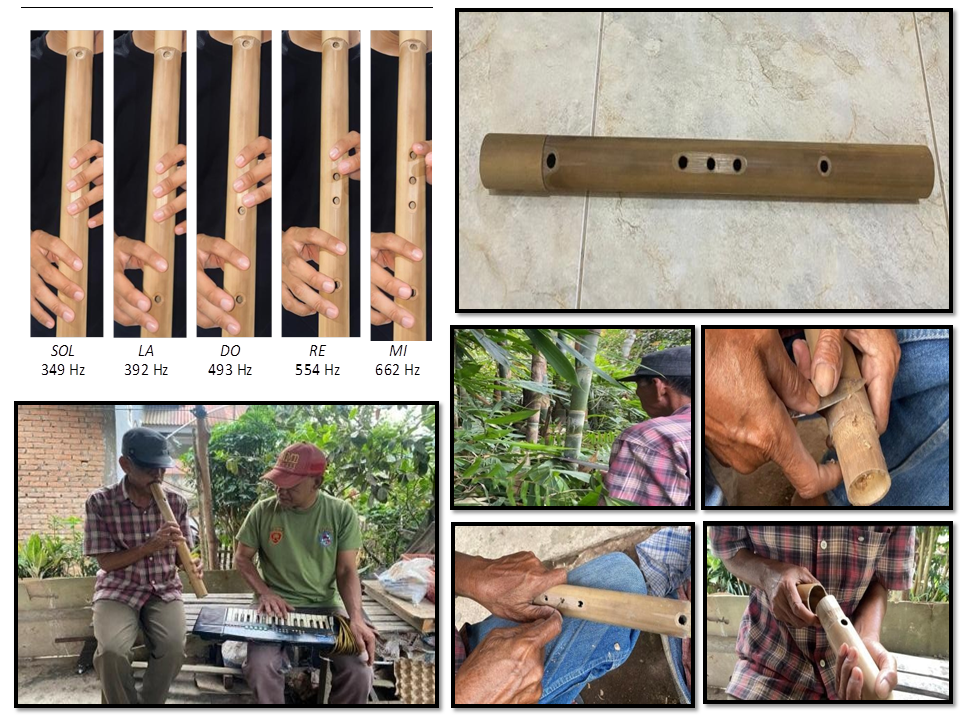
Sampelong, a traditional wind instrument originating from Nagari Tolang Maua, West Sumatra, is more than just a sound-producing tool it is a cultural footprint rich in meaning. This study examines the Sampelong through an organological approach, encompassing both textual and contextual aspects: from its physical structure, classification, and crafting process, to its tuning system and socio-cultural functions within Minangkabau society. A qualitative descriptive method was employed, using techniques such as observation, in-depth interviews, and documentation. The results show that Sampelong belongs to the aerophone category, specifically the wind instrument type, and is made from tolang bamboo. It utilizes a unique pentatonic scale known locally as jalua bukik, which reflects the region's musical identity. Once used in mystical rituals known as pakasiah, the instrument has since evolved into a form of musikal performance. Behind its simplicity lies a depth of cultural significance each breath through its bamboo body brings forth melodies of life, toil, love, and local wisdom. This research serves as both documentation and a preservation effort for a cultural heritage at risk of fading, while also inviting the younger generation to rediscover the harmony of a bamboo that sings.
References
Ayurizal. (2025). Film Dokumenter Sampelong Lahir sebagai Tugu Peradaban Minangkabau. Implementasi MOU – Prodi Musik Film ISI Padangpanjang.
Curt, S. (1940). The History of Musical Instruments. W. W. Norton, Incorporated. https://books.google.co.id/books?id=Uc5pLTtVwKgC
Hakim, U., Ananda, A., & Ardipal. (2017). Kesenian Sampelong Nagari Tolang Maua. Universitas Negeri Padang.
Hakim, U., Sari, A. M., & Hidayat, H. A. (2022). Serdam Sebagai Alat Musik Tiup Bambu Lampung Barat: Kajian Organologi Serdam as Bamboo Blow Music Instrument West Lampung: Study of Organology. Jurnal Sendratasik, 11(3)..
Hendarto, S. (2011). Organologi dan akustika I & II. Lubuk Agung. https://books.google.co.id/books?id=k7QtMwEACAAJ
Kadir, T. H., & Pd, M. (2005). Buku Ajar Organologi. Padang: Jurusan Sendratasik FBS UNP.
Kuntowijoyo. (2003). Metodologi sejarah. Tiara Wacana Yogya. https://books.google.co.id/books?id=iodPAQAAMAAJ
Kurniawan, R., & Syeilendra, S. (2020). Bentuk Musik Saluang Sirompak Versi Abah Emi Pada Acara Alek Pemuda Di Parik Dalam Nagari Taeh Baruah Kabupaten Lima Puluh Kota Payakumbuh. Jurnal Sendratasik.10, 1–12.
Lestari, A., & Hadi, H. (2023). Pelaksanaan Pembelajaran Seni Budaya Materi Musik Tradisional (Talempong Pacik) Pada Kelas X MIPA 1 di SMA Pertiwi 1 Padang. AVANT-GARDE: Jurnal Ilmiah Pendidikan Seni Pertunjukan, 1(2), 141-148.
Marzam, M., WS, H., Indrayuda, I., & Maestro, A. (2023). Continuity and Changes in Gandang Sarunai's Music Performance in Alam Surambi Sungai Pagu Society's Socio-Cultural Activities, South Solok Regency, West Sumatra. Humanus: Jurnal Ilmiah Ilmu-Ilmu Humaniora, 22(1), 135-144. https://doi.org/10.24036/humanus.v22i1.112775
Miles, M. B., Huberman, A. M., & Saldana, J. (2013). Qualitative Data Analysis: A Methods Sourcebook. SAGE Publications.
Moleong, L. J. (2012). Metodologi Penelitian Kualitatif. PT Remaja Yodaskarya. https://digilib.ub.ac.id/opac/detail-opac?id=140634
Putra, A. A. P., & Syeilendra. (2020). BELAJAR PIANIKA PADA PEMBELAJARAN SENI MUSIK DI KELAS VIII SMP NEGERI 12 KABUPATEN SOLOK SELATAN. Jurnal Sendratasik, 9(4), 223–236.
Sugiyono. (2016). Metode Penelitian Kuantitatif, Kualitatif Dan R & D. Bandung: Alfabeta.
Downloads
Published
Issue
Section
License
Copyright (c) 2026 Zahwa Warahma Sukma & Uswatul Hakim

This work is licensed under a Creative Commons Attribution-NonCommercial-ShareAlike 4.0 International License.