The Performance Structure of Senjang Art in Wedding Ceremonies in Sukajaya Village, Bayung Lencir Subdistrict, Musi Banyuasin Regency
DOI:
https://doi.org/10.24036/jsu.v15i1.24Keywords:
performance structure, Senjang, wedding ceremony, Musi BanyuasinAbstract
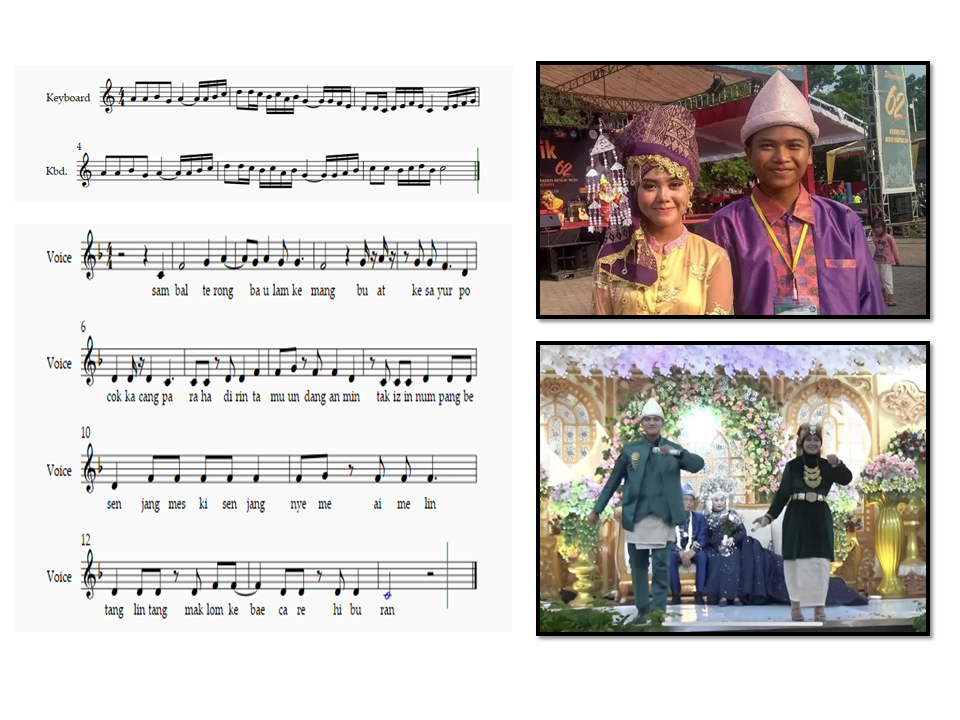
This study aims to describe in depth the structure of the Senjang performance at a wedding ceremony in Sukajaya Village, Bayung Lencir District, Musi Banyuasin Regency. This type of research is qualitative using descriptive analytical methods. The object of this research is the Senjang performance at a wedding ceremony. The types of data used in this study are primary and secondary data, while the main instrument is the researcher himself and requires tools to collect data in the field in the form of stationery and a cellphone camera. Data collection techniques include field observations, interviews with sources, and documentation in the form of photos, videos and written notes. Data analysis techniques are by collecting data, sorting data, presenting data then drawing conclusions and verification. The results of this study indicate that the structure of the Senjang presentation is divided into three main parts: the opening, content, and closing as well as supporting elements such as music, poetry, artists, performance venue, audience and performance time. The opening part serves as the entrance to the performance that contains politeness values. This is evident from the expression of permission or asking permission from the audience which indicates a cultural awareness of the ethics of speaking. Furthermore, the content part contains the main messages to be conveyed, whether in the form of advice, social criticism, or moral invitation. Finally, the closing section serves to reinforce what has been conveyed previously, as well as convey hopes, prayers, and an apology to the listener if any words have been offensive. Thus, each part of the Senjang structure has its own role and function, and is interconnected. Each part not only regulates the flow of the delivery but also reflects the cultural values that are alive and maintained within the community. absorb and reflect on the message conveyed in the verses.
References
Hakim, U., Mayang Sari, A., & Armez Hidayat, H. (2022). Serdam Sebagai Alat Musik Tiup Bambu Lampung Barat: Kajian Organologi. Jurnal Sendratasik, 11(3), 347. https://doi.org/10.24036/js.v11i3.119186
Hidayat, H. A., Syeilendra, S., Marzam, M., & Hakim, U. (2024). Study of the Influence of Local Cultural Values in the Traditional Music Learning Process in the Sendratasik Education Study Program. Gondang: Jurnal Seni Dan Budaya, 8(1), 139–148. https://doi.org/10.24114/gondang.v8i1.55509
Roni, A. (2021). BENTUK PENYAJIAN TARI CECAH INAI DALAM PESTA PERKAWINAN DI KECAMATAN RENGAT KABUPATEN INDRAGIRI HULU PROVINSI RIAU. 32(3), 167–186.
Hakim, U. (2017). Kesenian Sampelong di Nagari Tolang Maua, Kecamatan Mungka, Kabupaten 50 Kota Sumatera Barat. Universitas Negeri Padang.
Irawan, S. (2018). KESENIAN SENJANG ANTARA TRADISI DALAM ARUS GLOBALISASI SEBAGAI MEDIA PROPAGANDA.
Koentjaraningrat. (2009). Pengantar Ilmu Antropologi. Rineka Cipta.
Kurniawan, I., & Juli, S. (2020). Bentuk Penyajian Kesenian Senjang dalam Konteks Acara Seremonial di Kota Sekayu.
Levi, S. (2006). Strukturalisme dan Ilmu Ilmu Sosial (Terj. Rahayu S. Hidayat). Pustaka Belajar.
Mastura, A. (2023). Senjang, Warisan Budaya Tak Benda Masyarakat Musi Banyuasin. Sinar Sumatera.
Moleong, L. J. (2017). Metode Penelitian Kualitatif (Edisi Revisi). PT Remaja Rosdakarya.
Soedarsono. (2002). Seni Pertunjukkan Indonesia di Era Globalisasi. Gadjah Mada University Press.
Sukma, I. (2015). Keberadaan Kesenian Senjang Pada Masyarakat Kabupaten Musi Banyuasin Sumatera Selatan. 4 nomor 2, 3.
Syeilendra. (2000). Buku Ajar Musik Tradisi. Universitas Negeri Padang.
Virganta, A. L. (2016). Bentuk Nyanyian Rakyat dalam Seni Sastra Senjang di Kabupaten Musi Banyuasin. In 34 CATHARSIS (Vol. 5, Issue 1). http://journal.unnes.ac.id/sju/index.php/catharsis
Downloads
Published
Issue
Section
License
Copyright (c) 2026 Lidia Arlini & Syeilendra

This work is licensed under a Creative Commons Attribution-NonCommercial-ShareAlike 4.0 International License.